

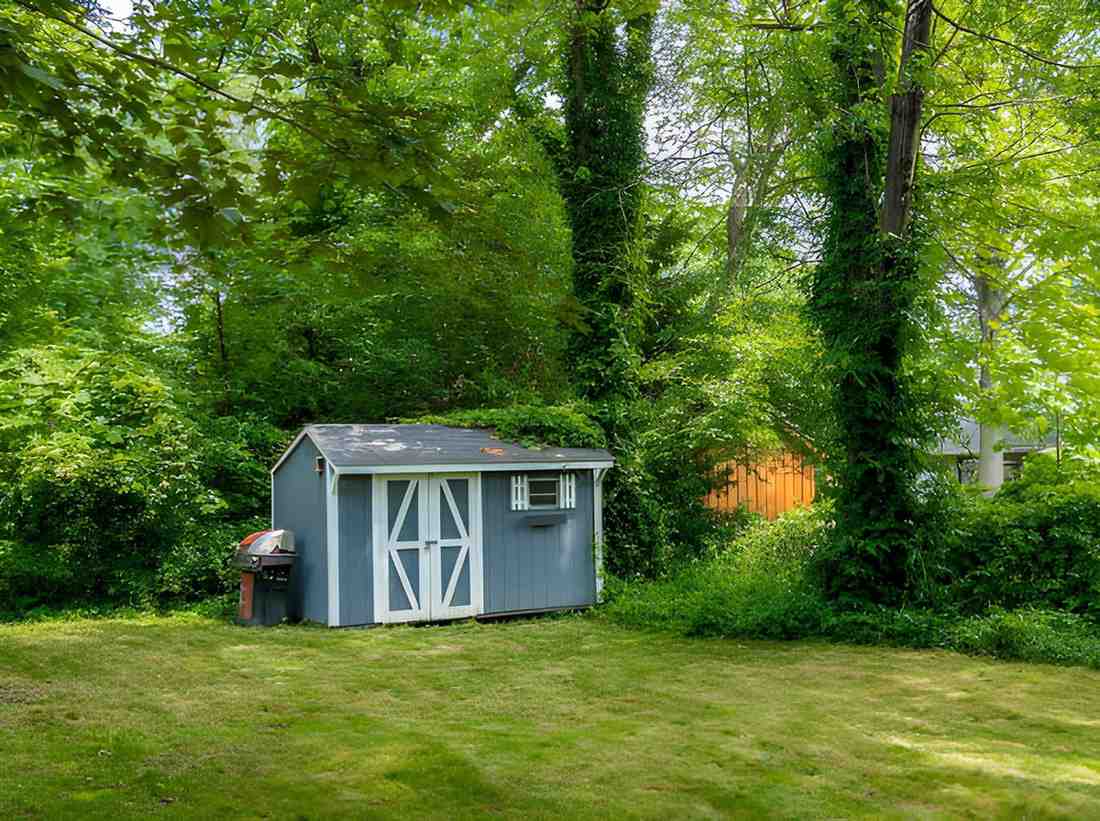
Fitting a massive outbuilding into your yard usually comes down to three things: where you put it, the colours you pick, and how you use plants to hide its size. Instead of just plopping an awkward box in the corner, try to treat big garden sheds like they are a natural part of your home or a specific focal point you planned from the start.
If you lean into different textures and plenty of greenery, you can actually turn a bulky utility space into a feature that feels like it has always been part of the landscape.
1. Use Colour to Your Advantage
Picking the right colour is one of the easiest ways to make a massive building blend in. If you go with darker shades like charcoal, forest green, or a deep slate, the structure tends to pull back into the shadows of your trees. It’s a bit of a visual trick that makes the whole thing look way smaller than it really is. Bright white or tan tones can feel too prominent and visually overpowering.
2. Layered Planting and Softening Edges
Big, flat walls and sharp corners are usually what make a building stick out like a sore thumb. To fix this, try mixing up different heights and textures around the base to blur those harsh lines. It creates a nice transition that bridges the gap between the grass and the structure itself.
- Foundation Plants: Standard evergreen shrubs like boxwood or yew are great for hiding the foundation. They help anchor the building so it doesn’t look like it’s just floating on top of the lawn.
- Vertical Interest: Putting a trellis on the side of the wall lets climbing plants like ivy or roses grow upward. This “living wall” look is one of the best ways to help the structure blend in with the natural shapes of your garden.
3. Creating Natural Pathways
A massive building usually looks a bit weird if it is just sitting all by itself in the middle of the grass. You can fix that “floating” look by connecting it to the rest of your yard with a real path. Using stuff like flagstones, crushed gravel, or even simple wood chips makes the area feel like a destination you actually want to walk to, rather than just a big box for your lawnmower.
4. Strategic Placement and Lighting

If you haven’t put the structure up yet, try tucking it into a corner or placing it against a row of trees. Using the natural “walls” of your yard helps the building blend right into the environment. If it’s already sitting out in the open, you can still fix the look by planting some privacy hedges or a few tall trees behind it to create a more natural backdrop.
5. Maintaining the Look
Keeping the whole thing looking natural is an ongoing project. You’ll want to stay on top of pruning so the plants don’t start looking messy, and give the walls a fresh coat of paint if you notice any fading. It is a lot easier to hide a well-kept building than one that looks like it’s falling apart. If you want to fix up your view, maybe head out this weekend to grab a few hardy shrubs to start softening those sharp corners.



No Comments